Shipping Protection on Shopify: Fees, Lost Package Claims and Chargebacks
How Shopify shipping protection works: pricing the fee, handling lost and stolen package claims, chargeback evidence, and choosing a Route alternative.
On this page
A customer emails: tracking says delivered, but there's nothing on the porch. You can refund them, reship, argue, or wait for the chargeback. Every option costs you something, and most stores make the call differently each time depending on who answers the email.
Shipping protection is one way to turn that mess into a policy. This guide covers what it is, how the fee usually works, how to handle lost and stolen claims fairly, and what evidence helps if a customer goes to their bank instead. At the end there's a short section on OrderGuard, the app I built for this, but most of the post applies whatever tool you use.
What shipping protection is (and isn't)
Shipping protection is an optional add-on at checkout. The customer pays a small fee, and in return, if the package is lost, stolen or arrives damaged, they get a refund or replacement without a fight.
There are two broad models:
- Provider-managed. A third party (Route is the best-known example) collects the fee, decides claims and pays them out. You do less work, but you give up the fee and some control over how your customers are treated.
- Merchant-managed. You set the fee, keep it, and decide claims under your own rules. You pay for approved claims yourself, out of the fees you collected.
Neither is free money. In the provider model, the provider needs claims to stay below premiums, and some merchants report being dropped when that stops being true for their store. In the merchant model, you carry the risk directly, so your claim rules matter.
What shipping protection isn't: it's not carrier insurance, and it doesn't stop a customer from filing a chargeback. It gives the customer an easier path than the bank, and it gives you a fund to pay for problems out of.
How the fee usually works
There are three common ways to price protection:
- Percentage of cart. For example, 2-3% of the order subtotal. This scales with risk, since a $400 order costs more to replace than a $40 one.
- Fixed fee. A flat amount on every order. Easy to explain, but it overcharges small orders and undercharges big ones.
- Tiers by order value. For example one price under $50, another from $50 to $150, and another above. A middle ground that's still easy to show at checkout.
A few things are worth deciding up front:
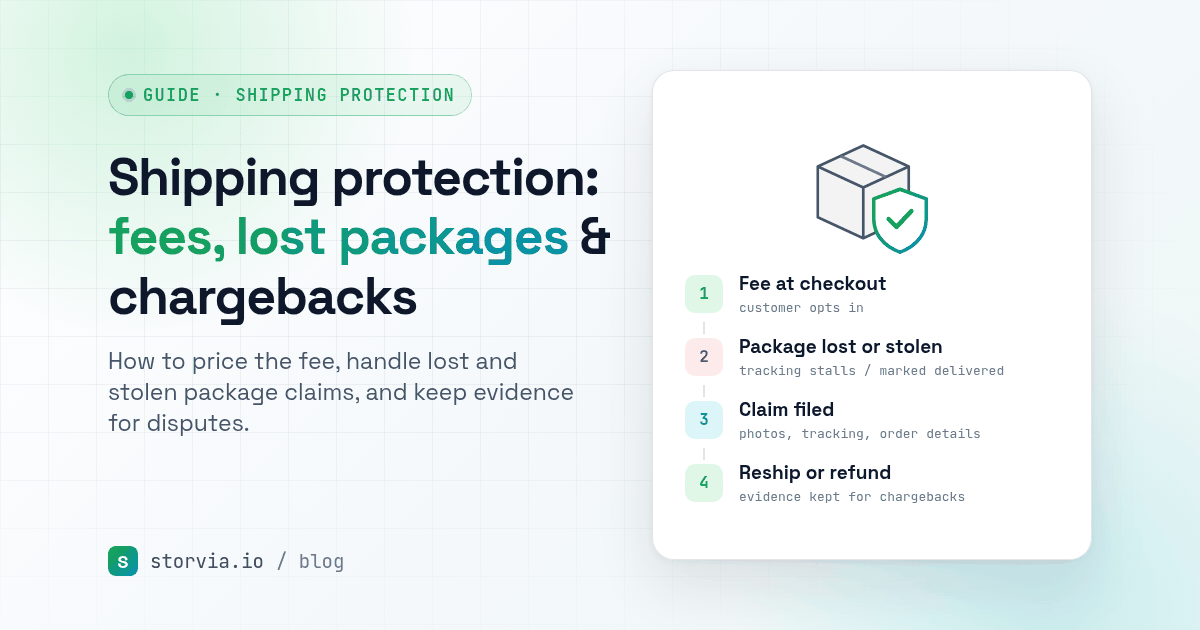
- Opt-in or not. Customers notice add-on fees they didn't choose, and they complain about them in public. In the EU, pre-ticked boxes for extra payments aren't allowed under consumer rules. An unticked checkbox the customer actively selects is the cleanest approach.
- Which products are covered. Digital goods, gift cards and some final-sale items often shouldn't carry a protection fee.
- What it says at checkout. One line on what's covered (lost, stolen, damaged) and a link to the policy is enough. Vague wording is how you end up arguing about a wrong-size return later.
Handling lost and stolen package claims
Most of the pain is here. A written process, even a short one, saves you from deciding each case from scratch.
1. Set a waiting period. Packages marked delivered often turn up a day or two later: with a neighbour, in a parcel locker, or delivered to the wrong door on the same street. Many stores ask customers to wait a short period after the delivered scan before filing a lost or stolen claim.
2. Ask the same questions every time. Did they check with neighbours and around the property? Is the shipping address correct? For damage, ask for photos of the item and the box. Keep this in a form, not a back-and-forth email thread.
3. Check the tracking yourself. Look at the delivery scan, the time, and whether there's a photo or GPS point from the carrier. If the package is stuck in transit, it's a carrier problem first.
4. Decide by rule, not by mood. Write down what you approve automatically, what needs a closer look, and what you refuse. Small-value claims from first-time customers are usually cheaper to approve than to investigate. Repeat claims from the same customer or address deserve a second look.
5. Pick refund or reship. Some customers want the item, some want their money back. Decide whether you offer a choice, and say so in your policy.
6. File with the carrier when it's worth it. For high-value parcels, a carrier claim can recover part of the cost. It's slow, so don't make the customer wait on it.
When the customer files a chargeback instead
An "item not received" chargeback can arrive even when you'd have happily refunded. Whatever happens, respond with evidence. What tends to help:
- Tracking with a delivery confirmation, ideally with the carrier's delivery photo or a signature for high-value orders.
- The shipping address used, and that it matches what the customer entered at checkout.
- Your communication. Order confirmation, shipping notification, and any replies from the customer.
- Your shipping and protection policy, and whether the customer chose not to add protection at checkout.
- Proof that you offered a fix, if they contacted you first and you offered a reship or refund.
Respond before the deadline in Shopify Payments or your payment provider, and keep it factual. A short, organised evidence pack beats a long angry letter.
Shipping protection helps here mostly by giving customers a faster route than their bank. A clear claims page that answers within days stops many disputes before they start.
Choosing a shipping protection app
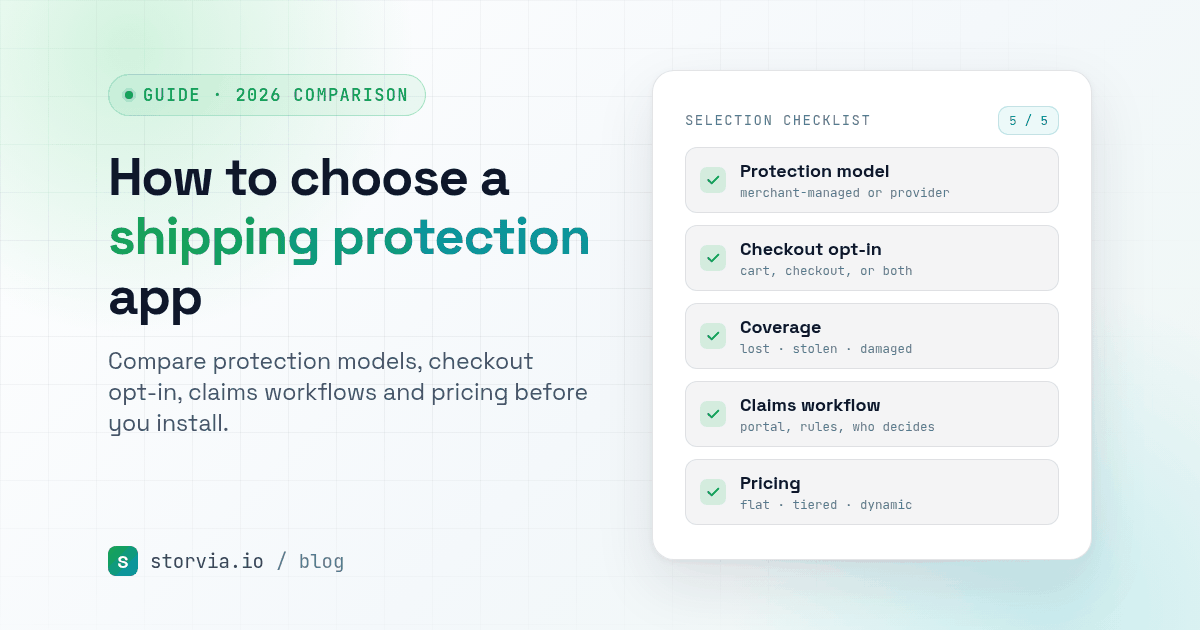
If you're comparing Route alternatives or setting this up for the first time, these questions sort apps out quickly:
- Who keeps the fee, and who decides claims?
- Can you price by percentage, flat fee or order value?
- Is the checkbox opt-in, and can you control that?
- Do customers file claims on a page, or by emailing you?
- Can you set rules to approve small claims and flag repeat claimers?
- Can you exclude products?
- Is there a contract or a minimum order volume?
Where OrderGuard fits
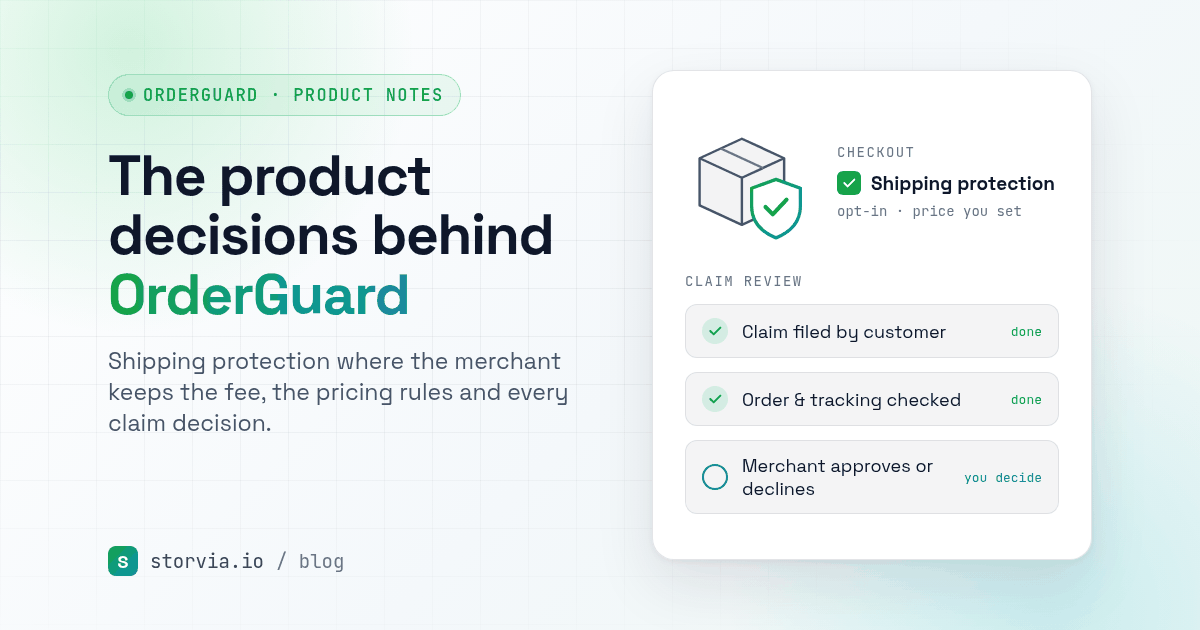
I build Shopify apps under the name Storvia Apps, and OrderGuard is my answer to those questions. It's merchant-managed, so you set the price and make the calls. Here's what it does:
- Flexible fee. Price protection as a percentage of the cart, a fixed amount, or in tiers by order value.
- You choose the checkout behaviour. You decide whether protection appears as an opt-in checkbox.
- A claims page on your storefront. Customers file lost, damaged or stolen claims there instead of emailing support.
- One dashboard for claims. You review every claim in one place.
- Claim rules. Auto-approve small claims, and flag customers who claim again and again.
- Product exclusions. Keep items like gift cards out of protection.
- Optional warranty add-on, if you want to offer cover beyond shipping.
- No contract. A free plan covers 100 protected orders a month, so you can try it on real orders before paying anything.

If you want to run protection on your own rules, OrderGuard is on the Shopify App Store. For why it works this way, read the product decisions behind OrderGuard.